Training Tip: Training Session Plans for Lazy Horses
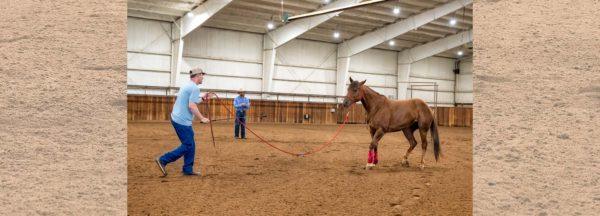
Question: When you’re teaching a dull or lazier type of horse to move away from pressure on the ground, do you spend more time sensitizing them and less time rubbing them to a stop than you would with a more reactive horse? In your videos, it seems that you spend more time rubbing it away with a sensitive horse and only a second or two with a dull horse before you go back to moving them again. – Amanda Gray
Answer: Yes, it’s important to adjust your approach for each horse. I put horses into two broad groups – hot-blooded and cold-blooded. There are pros and cons to each group.
Breeds like Arabians, Thoroughbreds and some bloodlines of Quarter Horses tend to be hot-blooded. These horses are generally very reactive, sensitive and intelligent. They love to go and move forward.
If you have a hot-blooded horse, you won’t have much trouble sensitizing him to pressure because he already wants to move his feet—you just have to tell him in what direction to move them. They also tend to pick up lessons and concepts very quickly.
Desensitizing a hot-blooded horse often takes more consistency and repetition. Teaching him to stand still and relax will be the hardest thing for you to do because hot-blooded horses want to do everything today and are usually very busy-minded and nervous. They are also very aware of new environments, so if you ride them in a different location, they often get very reactive and spooky until you can get them to use the thinking side of their brain. Although they learn quickly, they also seem to forget just as quickly.
Cold-blooded horses are generally docile, laid back and relaxed. This category is made up of most draft breeds and some bloodlines of Quarter Horses and gaited horses. These horses like to do everything slowly, and it usually takes them longer to catch on to a lesson or concept. However, once they understand a lesson, they never forget it.
Cold-blooded horses are generally easy to desensitize. Because of their laidback personalities, they’re often great confidence builders. If you have a cold-blooded horse, you’re going to spend a lot more time telling him to hurry up and move his feet. Unlike hot-blooded horses, cold-blooded horses say, “Life’s too short to be in a hurry. You look stressed. Do I look stressed?” They also have low ambition and don’t care to excel at anything except eating of course!
Everything you do with a hot horse is all about getting him to relax, slow down and chill out. On the other hand, everything you do with a cold horse is all about getting him to pull his finger out, speed up and put some energy in his feet.
Let’s say I’m working on Yield the Hindquarters Stage Two. If the horse is more sensitive and reactive, I’ll definitely spend more time rubbing him and making sure he knows that’s when he can relax. With a horse that’s lazier and tends to drag his feet, I’m not going to spend as much time between each yield. I’ll reward him by releasing the pressure and making sure he knows he did the right thing, but I don’t spend five minutes rubbing him so that he goes to sleep.
Looking for more training tips? Check out the No Worries Club. Have a training question? Send it to us at [email protected].
