Training Tip: Incorporate Everyday Objects Into Your Training Program
When it comes to training your horse, your imagination is your greatest tool. The more creative you can be in your lessons, the more interested your horse will be in his job. You’ve heard me say, “Consistency is your greatest ally and inconsistency is your greatest enemy.” And that’s absolutely true. It will take you a very long time to train your horse if you’re inconsistent. However, just as important as consistency is, you have to be sure to include variety. Variety means mixing it up for your horse and keeping him guessing at what you’re doing. It keeps him interested in his job and on his toes. However, you have to learn to balance the two. Too much consistency and the horse will get bored and resentful in his job. Too much variety and he will never learn anything.
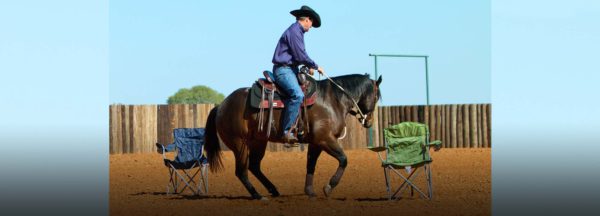
I love to incorporate objects laying around the ranch into my horse’s daily training. Here I’m using a camping chair to practice suppling exercises, but you can use any object that you have at home. Although I’m practicing an exercise I normally do on a daily basis, by incorporating the chair into the exercise, I’m adding variety. Always keep in mind that your imagination is your greatest tool, so use it!
What’s going on in the photo: If your horse is initially frightened of the new object, practice rollbacks into it. What’s the secret to controlling a horse’s mind? Moving his feet forwards, backwards, left and right. Horses can only think about one thing at a time. Your horse is either thinking about how scary the object looks or is concentrating on moving his feet. Each time he rolls back, he’ll get closer and closer to the spooky object. His fear of the object will really make him pick up his front end. Rollbacks are great to do because they teach the horse to work off his hindquarters and elevate his front end – key ingredients to collection.
