Training Tip: Advice for Dealing With a Runaway Horse
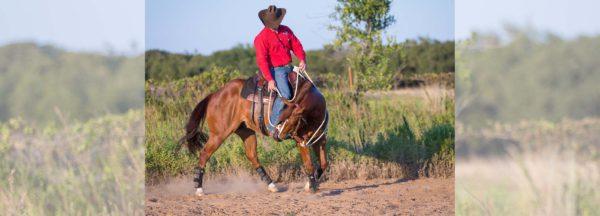
Question: My horse bolts. Anything could set him off. A bird flew out of the tree, the neighbor’s donkeys ran down the hill, or another horse in the group kicked a log. The Method reduced his bolting by 80 percent, but I still have the issue when we come upon anything that’s new or happens suddenly. What is the best way to handle a bolt that can’t be foreseen and prevented through moving his feet? Do I stop him or run him until he tires? – ADW11451
Answer: When your horse bolts and you feel like the situation is out of control, stop him and regain control by doing a One Rein Stop. Once you’re back in control of the horse after doing a One Rein Stop, put the horse’s feet to work. And I mean you need to make him hustle, constantly moving his feet forwards, backwards, left and right. Trot him in serpentines, do rollbacks, lope circles, etc. What you do isn’t important; it’s just important to hustle his feet and make him constantly change directions. Those two things will force the horse to use the thinking side of his brain and focus on you.
Then, after about 10 minutes of making his feet hustle, walk him down the trail on a loose rein. Dare him to take off again. If he breaks into a gait faster than a walk, immediately shut him down with a One Rein Stop, and then put his feet to work. Make him realize that bolting just results in more work. After a few repetitions of having to hustle and sweat, he won’t want any part of taking off on you.
This fix will not work if you’re not assertive and do not make the horse hustle his feet like his life depends on it. If you bend him around in a few cutesy, cutesy circles, you’ll be wasting your time and teaching your horse nothing.
This correction will also not work if you give the horse any rest. Don’t do a One Rein Stop, sit on the horse and cry for 10 minutes while you sort out your feelings, and then put his feet to work. Put him to work as soon as you feel like you’ve got him under control again. In fact, if you don’t feel like you have to, don’t even bring him all the way down to a standstill. Pull on one rein until you’ve slowed him down enough so that you don’t feel in danger, and immediately go put him to work. The less downtime you give the horse, the better.
One of the best ways to deter a horse from bolting or doing any other dangerous behavior is to check in with him every once in a while by asking him to move his feet and soften his body. As you’re riding him, ask him to two-track or sidepass. Do a bending transition. Draw him to a stop. Keep him tuned in to you and on his toes.
I’m not saying you can’t ever put him on a loose rein, but every so often, you need to put his feet to work and get him to check back in with you. If you only ride your horse on autopilot, letting him walk on a loose rein, he’ll find something to do with his energy and I can guarantee that whatever he finds to do won’t be your idea of a good time.
Have a horsemanship question or looking for more training tips? Check out the No Worries Club.
