The Support Your Horse Needs
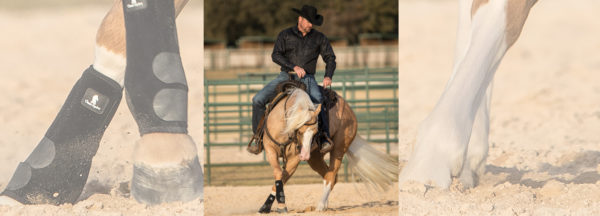
Protective boots can be thought of as an economical form of insurance for your horse, protecting against injury and preventing long-term complications. “No matter what your discipline, any horse can benefit from wearing support boots,” Clinton says.
While it’s important to protect your horse’s legs, it’s imperative that you choose a boot that doesn’t interfere with your horse’s natural movement. That’s the reason why Clinton prefers to use Classic Equine’s Legacy System Support Boots on his horses. The boots are designed to give natural reinforcement to the horse’s legs to provide protection with the least restriction.
“Classic Equine put in extensive time, research and field testing to make sure they produced a product that very effectively does its job, and then they just keep improving on it,” Clinton says.
Classic Equine’s Legacy System Support Boots are designed to cover the cannon bone with a cup-like action that cradles the fetlock joint, mimicking the natural ligament structure of a horse’s leg. Legacy Support Boots provide protection from external trauma, support the fetlock joint and help prevent hyperextension. Whether you’re exercising, training or out for a trail ride, Legacy Boots add natural reinforcement to the limb and ensure proper protection against outside hazards and interference from legs knocking together during maneuvers.
The boots also protect against nicks and scratches from sticks, debris and other hazards when riding outside. Even outside of competition, horse owners need to be aware of the risks of injury and take all the proper precautions to ensure the appropriate use of protective equipment to maintain soundness in their horses. As with anything, support boots can’t give you a 100-percent guarantee against injury, but they can help you avoid it and give you more peace of mind.
Another benefit of support boots is that they not only physically protect your horse; they can translate into mental security, ensuring your horse’s confidence to perform as instructed. When a horse gouges or crossfires, causing injury under your guide, the horse will naturally feel his safety is being jeopardized and will automatically be reserved and cautious when following your direction. A loss of confidence can mean that the true capability of you and your horse may never be realized.
Now through September 25th, when you buy a pair of front and hind Legacy System Boots, you’ll receive a free pair of DY-NO Bell Boots.
