Training Tip: Gelding Rears When Asked to Leave Other Horses
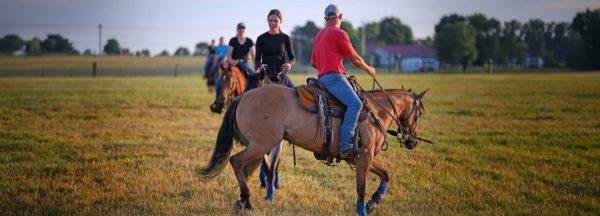
Question: I’ve gotten a new gelding named Bruno. Initially, when I’d ride him away from the barn out on the trails around my property, he’d do OK. When I’d turn him toward home, he’d get a little jiggy and prance, but nothing too bad. His behavior has gotten worse. Now, when I try to even walk him away from the barn, he throws a fit. He tosses his head and has started to rear. What do I do?
Clinton’s Answer: This is a fairly common issue. Think about life from your horse’s perspective. At the barn he gets to rest, relax, eat and socialize with his buddies. Out on the trail or in the arena, he has to work and get hot and sweaty. Which sounds like the better deal to you? When you stop and think about it, it’s no wonder that a lot of us have to deal with barn-sour horses. The first step to solving this problem is to realize that barn sourness isn’t the problem, it is really a symptom of a cause. The cause is the horse has a lack of respect and doesn’t want to leave the barn. To him, the barn and being with his pasture buddies is better than being ridden and worked hard. Horses are basically lazy creatures. They’d rather put in the least amount of effort as possible to get the day over and done with. Instead of making the horse leave the barn, give him a reason to want to leave.
In order to get the horse to want to leave the barn, work him hard at the barn where he wants to be. It doesn’t matter what you make him do as long as you move his feet and make him hustle. I do a lot of serpentines, rollbacks and counterbending. The more changes of direction you can make the horse do, the more he has to pay attention to you and concentrate on his job.
After working the horse 10 to 15 minutes, take him away from the barn and let him rest. Let the horse rest a good five to 10 minutes before taking him back to the barn and working him again. Initially, you’ll have to establish a starting point as to how far away from the barn you can take the horse. The first time you take him away from the barn, you might only get 30 feet away. Each time you rest him, you can gradually increase your distance away from the barn.
When you’re eventually able to ride your horse on the trail and he remains calm, not trying to race back to the barn, it’s still a good idea to do some maintenance on him. When you get him back to the barn, do a couple of rollbacks or take him through a couple of serpentines. Do something to make him move his feet and reinforce to him that just because he’s back at the barn, he’s not going to get an instant relief from work. Then tie him up for a couple of hours, which will improve his patience and will reinforce that just because he’s back at the barn, it doesn’t mean he’s getting turned out with his buddies or being put back in his stall.
Even if your horse has good behavior, you have to maintain it. The last thing you want to do is get back to the barn and immediately unsaddle him, put him away and give him some grain. Remember, horses are nothing more than maintenance with legs.
Looking for more training tips? Check out the No Worries Club. Have a training question? Submit it on our website.
