Training Tip: Yielding the Forequarters Trouble
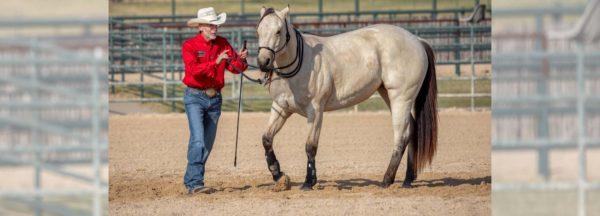
Question: When doing the starting point of Yield the Forequarters, I have applied pressure in the one-to-four rhythm from soft to high pressure with my stick being horizontal and my belly button being under the horse’s eye. My horse will not move an inch of her body no matter the pressure. Even with high pressure, she refuses to move. How can I achieve this step of the training or what can I do differently to even get the slightest try?
Answer: This is one of the most difficult exercises to teach horses in the Method. A lot of horses, especially those that are really pushy and disrespectful, use their head, neck and shoulders to push you around and move you out of their way. So when you go to teach them how to yield their forequarters, they want no part of it. They know that if you are able to move their front end, they no longer have the power to push you around with their head, neck and shoulders.
From your description, it sounds like you’re standing correctly and holding the stick correctly. To cue your mare to yield her forequarters, lightly tap the air with rhythm—one, two, three, four. If she doesn’t move, tap her jaw and neck with the stick—one, two, three, four. Every set of four taps, increase the pressure until you make her feel uncomfortable enough to look for the right answer.
At that point, maintain the pressure and wait for her to move her front end away from you. Even if she just shifts her weight away from you, reward her. Release the pressure and stop tapping her with the stick. Eventually, you’re looking for her to step her outside front foot across her inside front foot. Right now, because she’s struggling with the exercise, we’re going to look for an easier starting point. Once she understands to move her front end away from you, then you can get pickier and build on that concept.
I recommend that you video yourself doing the exercise. I strongly suspect that what you think you’re doing and what you’re actually doing aren’t the same thing. If you were truly going through the stages of pressure and applying pressure until your mare felt uncomfortable enough to look for a way to make the pressure go away, you’d get a response. A lot of people understand the idea that they’re supposed to increase the level of pressure with every count of four, but when it comes to actually putting it into practice, they don’t execute it.
The key here is to keep applying pressure until the horse is uncomfortable enough to look for another answer. Your description is painting a picture of a horse flicking cigarette butts at you and yawning. Make her take you seriously. I didn’t say increase the pressure until you feel uncomfortable. I said increase the pressure until she feels uncomfortable and looks for a way to make the pressure go away.
My idea of high pressure and most people’s idea of pressure aren’t in the same zip code. Always start gently, and if the horse doesn’t respond, increase the pressure. I think if you video yourself and study how you’re cueing her, you’ll see that you’re not being effective.
Looking for more training tips? Check out the No Worries Club. Have a training question? Send it to us at [email protected].
