Training Tip: How to Introduce a Halter to an Unhandled Weanling
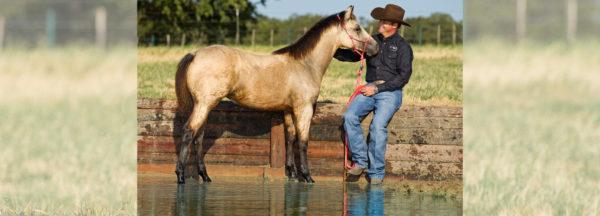
Just like with any new piece of equipment you introduce to a horse, the halter takes some getting used to. Feeling pressure around his nose and behind his poll will be a new experience for your young horse, but you can use a step-by-step approach to ensure that 1) the weanling isn’t worried about the halter, and 2) he’s introduced to the halter’s pressure in a stress-free way.
Clinton explains how to halter break a young horse in the Foal Training Series. The exercises covered in the kit are intended to be used with horses that are under a year of age. If you’re working with an older, unhandled horse, you’d want to follow the training process laid out in the Colt Starting Series.
Clinton breaks introducing the halter to a horse down into two stages:
Stage One: Desensitizing the Horse’s Head to Your Touch
Stage Two: Haltering
Before introducing the halter to a horse, you have to be able to touch his head with your hands. If you can’t touch his head, you have no hope of getting a halter on him. Keep in mind that horses are often defensive about being touched on their heads, especially near their muzzles and around their eyes and ears, because they’re very vulnerable in these areas. Mother Nature tells a horse that if he injures his nose, mouth, eyes or ears, he won’t survive. Without his nose, he can’t smell a predator sneaking up on him and he can’t sniff out the nearest watering hole. Without his mouth, he can’t eat. If he’s blind, he can’t see danger approaching or know where to run to safety. And without his ears he can’t hear the rustle of a predator about to attack. It’s a horse’s natural instinct to protect himself and stay out of harm’s way.
Your job is to teach your horse that even though his head is sensitive and vulnerable, he can accept your touch because you won’t harm him. There are a lot of horses out there that have been taught to be head shy. You can’t touch their face, clip their ears, bridle them, etc.
Following the Method, this lesson is your first step to prove to your young horse that nothing bad will happen to him if you touch his head. In fact, if he stands still, relaxes and accepts your touch, you’ll retreat and leave him alone. You’ll find though, that the horse will actually enjoy getting his face rubbed, especially if you use a lot of feel in your hands.
