Training Tip: Your First Horse Should Build Your Confidence
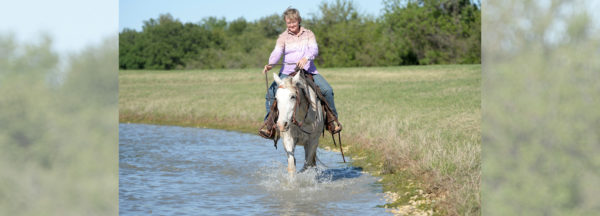
Everybody’s first horse should be a 23-year-old, one-eyed, crippled, ugly gelding. Think about the mental picture you get when you read that description. I think of an old ranch gelding that’s safe, quiet and has lots of miles under his feet. He has been ridden outside on trails and in pastures for many years. He’s dependable, honest and a great confidence builder for a beginner.
Do I really mean that you should go get a blind, crippled, lame gelding? No, but I say that to plant an image in your mind. That statement is the complete opposite of a black, shiny, pretty 2-year-old Thoroughbred straight off the track isn’t it?
I wish all horses came with three odometers on their necks that logged the hours they’ve been ridden, the miles they’ve been loped and the hours they’ve been ridden away from home. Like you could flip up your horse’s mane and right there on his neck you could see how much experience he has. That would take care of so many problems in the horse world it’s not even funny.
Those three numbers tell you a lot about a horse’s experience and the training he’s received. My mentor Gordon McKinlay told me that a truly great, well-broke horse needs three equal doses of long rides, wet saddle pads and concentrated training. The only way you put long rides, wet saddle pads and concentrated training on a horse in three equal doses is to put some steady miles under his feet. I consider my Signature Horses to be truly broke, beginner-safe horses. To get to that level of training, those horses are ridden an hour and a half a day, six days a week for a year and a half. They’re ridden for hundreds of hours and loped for thousands of miles.
If you’re a beginner, you’re looking for a horse with thousands of miles under his feet. When you walked up to that one-eyed ranch gelding, his odometer reading would be six figures. That shiny Thoroughbred off the track? His would barely reach three figures.
Remember, your first horse is like training wheels – his purpose is to build your confidence.
