Training Tip: Pay Attention to Your Position When Riding Hills
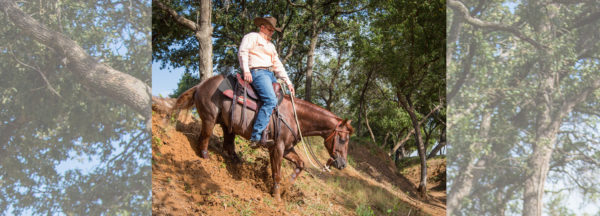
The rider’s position makes a difference in how well a horse can go up and down the hill. Your horse has to balance his weight and your weight negotiating a hill, and by sitting properly, you can help him out.
When I’m going down a hill, I lean back a little bit on my horse and help the horse put his weight on his hindquarters. Be careful not to lean too far back, though. Remember, although you want to stay balanced in the saddle and help the horse lighten up his front end, it’s his hindquarters that are doing the heavy lifting. A good rule of thumb is to keep your spine parallel to the trunks of trees you pass on the hill.
When I’m going up a hill, especially if it’s a steep hill, I lean forward and grab some mane halfway up the horse’s neck. That keeps the saddle in position and it also helps me with my balance a little bit. It’s very important not to be leaning forward when you’re going down, and not to be leaning back when you’re going up. That will unbalance you and your horse, which makes his job twice as difficult.
If you’re going on a trail with a lot of steep hills or gullies, it wouldn’t hurt to have a breast collar on your horse to stop the saddle from sliding back.
