Training Tip: Light Hands = Light Mouth
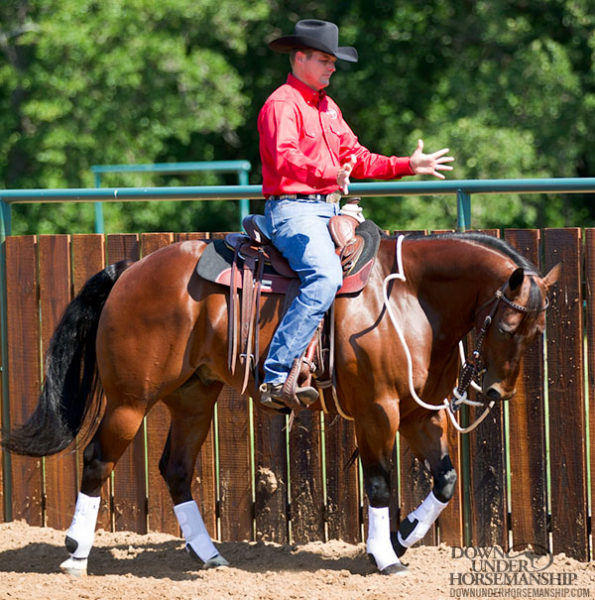
You’ve probably heard the saying, “Light hands, light mouth.” I disagree with that. I say, “Light hands that pick up softly and hands that release quickly make a horse’s mouth light.” For example, you could pick up gently on the reins and be very light, but if your horse roots against that pressure and flips his nose out or pulls on the reins, if you don’t make him feel uncomfortable by increasing the pressure on the reins (or in some way make him feel uncomfortable for the behavior) you’re going to be teaching him that pulling against the bit is acceptable because there’s no consequence for it. If you let the horse lean on the bit, he will remain heavy and stiff, and it will be difficult to progress his training.
On the other hand, if you pick up on the reins and make contact and don’t release back to the horse when he softens and gives, your horse won’t get soft, either. Releasing pressure is the horse’s reward for doing the right thing. Knowing when to release pressure is when feel and timing come into play. Remember this: The quicker you release, the quicker the horse understands. Horses just want us to stop pulling on them. They dream about it out in the pasture and in their stalls. You can make it a reality for your horse by teaching him that as soon as he softens, he’ll get an instant release of pressure.
